Why do I enjoy Chekhov and Joyce, and why do I find this part of the course the most rewarding to teach even if students often don't agree with me (let's face it, these stories are, at first glance, boring)? Mostly because I think both of these writers embed a lot of poetic complexity in soils of simplicity - basically what "realism" is and should be - and that if we allow the structures and subtleties of both writers to truly digest, we can take away personal meanings and "epiphanies" that are useful each day - that can also help us as writers (and thinkers).
In Gooseberries, where three men (arguably four) exhibit and reflect varying approaches to happiness, this passage reached me the most:
At the door of every contented, happy man somebody should stand with a little hammer, constantly tapping, to remind him that unhappy people exist, that however happy he may be, sooner or later life will show him its claws, some calamity will befall him—illness, poverty, loss—and nobody will hear or see, just as he doesn’t hear or see others now. But there is nobody with a little hammer, the happy man lives on, and the petty cares of his life stir him only slightly, as wind stirs an aspen—and everything is fine.
Joe Fassler, in his article in The Atlantic, sums it up much better than I can, as to why we should value this story and look at it from different angles:
"I always come out of that passage feeling like it’s a beautiful piece of rhetoric, one that articulates something I really believe. I’ve quoted this line on book tours, trying to explain why I don’t mind writing dark fiction: One role of literature, I’ll tell them, is to be the guy with the hammer, saying, “Look, we’re all pretty happy right now, but let’s just not forget the fact our happiness doesn’t eradicate the suffering of others.” It’s a beautiful insight about the lazy nature of happiness—and, for a few minutes, I think we’re meant to think that this stirring speech by Ivan is the whole point of the story."
Fassler's article made me think of a This American Life podcast episode I recently listened to, titled "The Show of Delights," where various people explore the little things in life that make them happy via "seeking joy." Even if it is not the topic of daily discussion, each of us has our own interpretation of what "happiness" is and what the little "pleasures" are that build the "state of happiness." While pleasure and happiness are related, but very different in that one can truly be depressed while also experiencing pleasure (drug addiction, eating disorders, gambling - pick any and all vices that produce a temporary sensation of pleasure), it is without doubt that if one is truly happy that daily delights and pleasures had something to do with it. In Gooseberries we see there's a relationship among the details Chekhov gives us - refreshing baths, silk pajamas, a pretty maid, and, arguably, good conversation. As Fassler continues:
"Looking at what happens during the digression [story of Ivan's brother], then, you start to realize that the story is a reflection on different forms of happiness. There’s a beautiful scene where they’re all taking a sensuous bath—“Oh my God, Oh my God,” Ivan keeps repeating, so completely moved by the feeling of the water. Then, later, this woman Pelageya waits on the men—and she’s so beautiful that they can only turn and stare at each other with their jaws on the floor. Why are these things here? Why are they worth giving space to in this extremely short piece? It’s because they’re both manifestations of beauty in the world, celebrating the things that make us pointlessly happy, and they complicate the dark vision of happiness that Ivan spells out later.
That’s one of my favorite things about Chekhov: his ability to embody what I call “on the other hand” thinking. He'll put something out with a great deal of certainty and beauty and passion, absolutely convincing you—and then he goes, “On the other hand,” and completely undermines it. At the end of this story you ask, “Chekhov, is happiness a blessing or a curse?” And he’s like, “Yeah, exactly.”"
In Fassler's last sentence, he sums up one of the keys to reading Chekhov: identifying the question he wants us to debate. So, what is happiness? How to be happy? Is it something we should work for, save for, wait for? Is is something that can coexist with the suffering of others? Is material happiness often connected with some sort of sacrifice - "joined to the present by an unbroken chain of events" - like an iPhone that produces happiness but came at the hands of human suffering in a Chinese factory?
Back to the podcast episode, The Show of Delights, where Ira Glass gives his intro:
"In these dark, and confusing, and combative times, where in just one month-- and it's a month that doesn't feel that atypical-- we have impeachment hearings, and Australia on fire, and a near war with Iran, and a deadly virus spreading around the world. We thought here at our show, we would try the most radical counter-programming possible. So today, we bring you our show about delight."
Sunday, 13 February 2022

Monday, 26 October 2020
Reading Journal #3: Form a "claim" about James Joyce's "Araby"
For this week, I want to do something a bit different and more structured. Some of you may find this "restricting" and maybe even more difficult than a straight-forward opinion piece, but I think it will help you focus on structure and paragraph concision, and force you to think about the many dualities of "Araby." As with most short stories in this class, there is plenty of ambiguity with Joyce where one can offer a "claim."
Similar to a fill-in-the-blank exercise, I'd like you to write a developed paragraph (almost like a mini-essay) that consists of 5 lead sentences that will soundly develop your opinion. You are allowed to tack on added sentences before you elaborate the others if you need them (so you don't blather on in massive run-on sentences); BUT you must use these 5 sentences and have them appear in this order. Your paragraph should end up fairly long.
Sentence #1:
From a distance, James Joyce’s "Araby" might appear .....
In this first sentence, you will get to a direct point very clearly and concisely. Your job is to finish that sentence in your own words with a reasonable "claim" that pinpoints an issue of contention about “Araby.” Be clear, but don't be general.
Similar to a fill-in-the-blank exercise, I'd like you to write a developed paragraph (almost like a mini-essay) that consists of 5 lead sentences that will soundly develop your opinion. You are allowed to tack on added sentences before you elaborate the others if you need them (so you don't blather on in massive run-on sentences); BUT you must use these 5 sentences and have them appear in this order. Your paragraph should end up fairly long.
Sentence #1:
From a distance, James Joyce’s "Araby" might appear .....
In this first sentence, you will get to a direct point very clearly and concisely. Your job is to finish that sentence in your own words with a reasonable "claim" that pinpoints an issue of contention about “Araby.” Be clear, but don't be general.
Sentence #2:
After all, when the nameless narrator .....
Developing the often overlooked contention of the first sentence, you are now going to establish why we need to dig deeper into the subtle subtext.
After all, when the nameless narrator .....
Developing the often overlooked contention of the first sentence, you are now going to establish why we need to dig deeper into the subtle subtext.
Sentence #3:
However, on the other hand, ....
You are now going to complicate your contention with a contrasting notion that shows your level of thought. There are many conflicting things at work in Joyce's tale, and you have to illuminate the depth.
However, on the other hand, ....
You are now going to complicate your contention with a contrasting notion that shows your level of thought. There are many conflicting things at work in Joyce's tale, and you have to illuminate the depth.
Sentence #4:
Therefore, it is perhaps more accurate to assume that "Araby" ....
Conclude this sentence with your official claim that reveals an isolated area of subtext. This sentence should capitalize on what the former ones have set up. Set up your claim.
Therefore, it is perhaps more accurate to assume that "Araby" ....
Conclude this sentence with your official claim that reveals an isolated area of subtext. This sentence should capitalize on what the former ones have set up. Set up your claim.
Sentence #5
In this sense, ....
Work towards your conclusion and support sentences that back your claim. Explore it. You may wish to describe a literary device or something that Joyce did, and why he might have done it. This is your time to sound like Mr. Tame and Mr. Tweedie.
Wednesday, 22 April 2020
Magic Realism: The Handomest Drowned Man In the World - By Gabriel Marquez
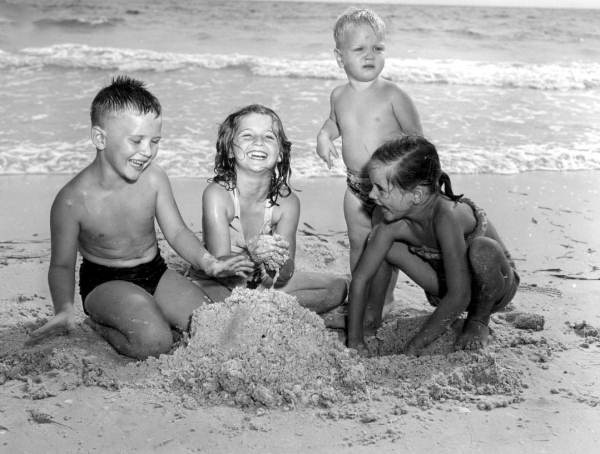
Before we examine what, inexactly, "magic realism" is (or might be), I'd like to simply read this story in class without any pretext. We don't know who Marquez is, or when and where he wrote the story, and we have no idea what "magic realism" is (though the title of the genre more than hints at what it could be).
Again, this is short and sweet, and a lot of fun to read:
By Gabriel Marquez, 1927-Present

Saturday, 11 April 2020
"The Dead" by James Joyce

Here, I found a nice PDF for the story, if you prefer reading them rather than HTML text.
Here is a text version if you don't like PDF.
Here is an annotated version of the story WITH A LOT to click on and learn on a much deeper level.
http://www.mendele.com/WWD/
Pretty amazing resource if you have the curiosity to understand EACH sentence and word.
As you can see above, it was made into an award winning film, which me may watch if you feel it is interesting enough AFTER reading.
We will spend at least two weeks on this one, because it is a tad long.
Friday, 27 March 2020
The endless process of dissecting Joyce...

Here is the PDF of "Araby" : https://www.plato-philosophy.org/wp-content/uploads/2016/05/Araby.pdf
Points of discussion: male gaze, the quest (Hero's Journey), setting as character
On a whim, I googled "Mangan's sister" to see what the internet turned up. We know so little about her, and perhaps we ignore her more than we should. Is she more than just a pretty face? Is there something in the text that we can stumble over?
We know that Joyce, as a male author, had issues with women, and dealt with that heavily in his writing. Especially in The Dead. But what about in Araby? Here is an interesting view from someone, who decided to dig a bit deeper and consult female professors.
Wednesday, 19 February 2020
"Eveline" by James Joyce
Here is the YouTube audio book version you may wish to listen to while reading along. I think the reader does help draw attention to mood in some ways:
PDF: http://openmods.uvic.ca/islandora/object/uvic%3A661/datastream/PDF/view
Pay attention to how Joyce treats a female character in a third person narrative, compared to the first person we met in Araby. His choices present interesting comparisons and questions.
As well, watch for correlations in terms of themes of urban landscape (decay, change, industrialization) and how overtones of religion and duty hang in her midst as she ruminates her life decisions. As always, pay special attention to "the epiphany" and how that relates to "paralysis" - something that Dubliners turns to again and again to show how culture and tradition often results in stasis and lack of fulfillment.
PDF: http://openmods.uvic.ca/islandora/object/uvic%3A661/datastream/PDF/view
Pay attention to how Joyce treats a female character in a third person narrative, compared to the first person we met in Araby. His choices present interesting comparisons and questions.
As well, watch for correlations in terms of themes of urban landscape (decay, change, industrialization) and how overtones of religion and duty hang in her midst as she ruminates her life decisions. As always, pay special attention to "the epiphany" and how that relates to "paralysis" - something that Dubliners turns to again and again to show how culture and tradition often results in stasis and lack of fulfillment.
Monday, 10 February 2020
"Gooseberries" by Anton Chekhov
Text to read along: https://www.colorado.edu/globalstudiesrap/sites/default/files/attached-files/gooseberries_by_anton_chekhov_1898.pdf
Audio Book:
Much more similar in structure and tone to The Student than Lady With the Dog, Goosberries features another Ivan walking the fields, this time with a friend, and this time entering the space of a landowner rather than humble widows. Below I've included an excerpt from a really great article in The Atlantic about the hidden meanings in the story which is worth reading. The entire article is worth reading but very long, so here is the meat of it:
https://www.theatlantic.com/entertainment/archive/2017/02/george-saunders-on-chekhovs-different-visions-of-happiness/516798/
The story is an extended meditation on the idea of happiness. It’s basically a story of two friends who get caught in a rainstorm while they’re out hunting, and they go to a nearby house of someone they know named Alekhin. After they take a swim, one of the friends, Ivan, tells a story about his brother, who had an obsession with owning a small estate, and with eating the gooseberries that he grew on the porch. As Ivan tells the story of his brother it becomes a kind of a screed about how happiness—especially his brother’s happiness—disgusts him, how pig-like people who pursue their own happiness are.
Ivan’s story builds in intensity, and by the end he’s making this beautiful, passionate case for why happiness is a confusing, undesirable emotion. In his telling, it’s almost a delusion to be mindlessly happy when others are sad. The sentiment is so heartfelt that it’s almost as though it came right out of Chekhov’s journals:
At the door of every contented, happy man somebody should stand with a little hammer, constantly tapping, to remind him that unhappy people exist, that however happy he may be, sooner or later life will show him its claws, some calamity will befall him—illness, poverty, loss—and nobody will hear or see, just as he doesn’t hear or see others now. But there is nobody with a little hammer, the happy man lives on, and the petty cares of his life stir him only slightly, as wind stirs an aspen—and everything is fine.
I always come out of that passage feeling like it’s a beautiful piece of rhetoric, one that articulates something I really believe. I’ve quoted this line on book tours, trying to explain why I don’t mind writing dark fiction: One role of literature, I’ll tell them, is to be the guy with the hammer, saying, “Look, we’re all pretty happy right now, but let’s just not forget the fact our happiness doesn’t eradicate the suffering of others.” It’s a beautiful insight about the lazy nature of happiness—and, for a few minutes, I think we’re meant to think that this stirring speech by Ivan is the whole point of the story. In a way, it is. Except, on the next page, we see that Ivan’s audience is bored and disappointed by the story. They wish that he’d had something better to say, and the whole evening ends on a flat note. But then there’s this wonderful little reversal at the end, a mysterious and beautiful turn. It happens when Ivan goes up to his room, which he’s sharing with his friend Burkin. They’re both in bed, beds which have been made up by Alekhin’s beautiful maid:
Their beds, wide and cool, made up by the beautiful Pelageya, smelled pleasantly of fresh linen.
Ivan Ivanych silently undressed and lay down. “Lord, forgive us sinners!” he said, and pulled the covers over his head.
His pipe, left on the table, smelled strongly of stale tobacco, and Burkin lay awake for a long time and still could not figure out where that heavy odor was coming from.
Rain beat on the windows all night.
Ivan leaves his unclean pipe out all night, keeping his friend Burkin awake. And that’s how Chekhov gets away with putting his real feelings about the oppressive nature of happiness into a character’s mouth. Without irony, without condescension, he just lets the character have his say. But then, here, Chekhov destabilizes the beautiful rhetoric of the previous section by showing another side of the guy who made that impassioned speech: He’s also self-obsessed and thoughtless enough to burden his friend with a smelly pipe. It's a great double whammy. You get the beautiful, articulate case against happiness, and then you get this complicating overtone of selfishness in the person who just made that beautiful speech.
We’re often told not to put our passions and political feelings into a story. But I actually think it’s a good idea. Put them in there, then step away. Imagine that the idea isn’t you, that it’s just an idea that part of you expressed. Then you can use the structure and the form of the story to kind of poke at your own beliefs a little and see if you can get more light out of them.
That’s exactly what happens, structurally, in “Gooseberries.” Ivan starts to tell his story right on the first page, but he’s interrupted by the rainstorm. And while they get in out of the rain, meet their host, and bathe, a full third of this nine-page story goes by. I always ask my students: What’s the point of this digression? Because the short story form makes a de facto claim of efficiency—its limited length suggests that all the parts are there for purpose. If there’s a structural inefficiency that never comes home to roost, or never produces beauty later, we note that as bad storytelling. And so whatever ultimate meaning “Gooseberries” has, it has to have something to do with what's contained in that digression—or else it’s a flawed piece.
Audio Book:
Much more similar in structure and tone to The Student than Lady With the Dog, Goosberries features another Ivan walking the fields, this time with a friend, and this time entering the space of a landowner rather than humble widows. Below I've included an excerpt from a really great article in The Atlantic about the hidden meanings in the story which is worth reading. The entire article is worth reading but very long, so here is the meat of it:
https://www.theatlantic.com/entertainment/archive/2017/02/george-saunders-on-chekhovs-different-visions-of-happiness/516798/
The story is an extended meditation on the idea of happiness. It’s basically a story of two friends who get caught in a rainstorm while they’re out hunting, and they go to a nearby house of someone they know named Alekhin. After they take a swim, one of the friends, Ivan, tells a story about his brother, who had an obsession with owning a small estate, and with eating the gooseberries that he grew on the porch. As Ivan tells the story of his brother it becomes a kind of a screed about how happiness—especially his brother’s happiness—disgusts him, how pig-like people who pursue their own happiness are.
Ivan’s story builds in intensity, and by the end he’s making this beautiful, passionate case for why happiness is a confusing, undesirable emotion. In his telling, it’s almost a delusion to be mindlessly happy when others are sad. The sentiment is so heartfelt that it’s almost as though it came right out of Chekhov’s journals:
At the door of every contented, happy man somebody should stand with a little hammer, constantly tapping, to remind him that unhappy people exist, that however happy he may be, sooner or later life will show him its claws, some calamity will befall him—illness, poverty, loss—and nobody will hear or see, just as he doesn’t hear or see others now. But there is nobody with a little hammer, the happy man lives on, and the petty cares of his life stir him only slightly, as wind stirs an aspen—and everything is fine.
I always come out of that passage feeling like it’s a beautiful piece of rhetoric, one that articulates something I really believe. I’ve quoted this line on book tours, trying to explain why I don’t mind writing dark fiction: One role of literature, I’ll tell them, is to be the guy with the hammer, saying, “Look, we’re all pretty happy right now, but let’s just not forget the fact our happiness doesn’t eradicate the suffering of others.” It’s a beautiful insight about the lazy nature of happiness—and, for a few minutes, I think we’re meant to think that this stirring speech by Ivan is the whole point of the story. In a way, it is. Except, on the next page, we see that Ivan’s audience is bored and disappointed by the story. They wish that he’d had something better to say, and the whole evening ends on a flat note. But then there’s this wonderful little reversal at the end, a mysterious and beautiful turn. It happens when Ivan goes up to his room, which he’s sharing with his friend Burkin. They’re both in bed, beds which have been made up by Alekhin’s beautiful maid:
Their beds, wide and cool, made up by the beautiful Pelageya, smelled pleasantly of fresh linen.
Ivan Ivanych silently undressed and lay down. “Lord, forgive us sinners!” he said, and pulled the covers over his head.
His pipe, left on the table, smelled strongly of stale tobacco, and Burkin lay awake for a long time and still could not figure out where that heavy odor was coming from.
Rain beat on the windows all night.
Ivan leaves his unclean pipe out all night, keeping his friend Burkin awake. And that’s how Chekhov gets away with putting his real feelings about the oppressive nature of happiness into a character’s mouth. Without irony, without condescension, he just lets the character have his say. But then, here, Chekhov destabilizes the beautiful rhetoric of the previous section by showing another side of the guy who made that impassioned speech: He’s also self-obsessed and thoughtless enough to burden his friend with a smelly pipe. It's a great double whammy. You get the beautiful, articulate case against happiness, and then you get this complicating overtone of selfishness in the person who just made that beautiful speech.
We’re often told not to put our passions and political feelings into a story. But I actually think it’s a good idea. Put them in there, then step away. Imagine that the idea isn’t you, that it’s just an idea that part of you expressed. Then you can use the structure and the form of the story to kind of poke at your own beliefs a little and see if you can get more light out of them.
That’s exactly what happens, structurally, in “Gooseberries.” Ivan starts to tell his story right on the first page, but he’s interrupted by the rainstorm. And while they get in out of the rain, meet their host, and bathe, a full third of this nine-page story goes by. I always ask my students: What’s the point of this digression? Because the short story form makes a de facto claim of efficiency—its limited length suggests that all the parts are there for purpose. If there’s a structural inefficiency that never comes home to roost, or never produces beauty later, we note that as bad storytelling. And so whatever ultimate meaning “Gooseberries” has, it has to have something to do with what's contained in that digression—or else it’s a flawed piece.
Monday, 3 February 2020
The Student - By Anton Chekhov (1894)
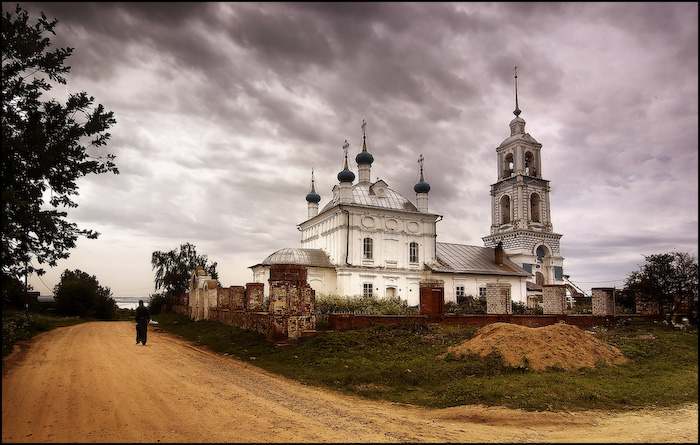
"The Student" by Anton Chekhov
AT first the weather was fine and still. The thrushes were calling, and in the swamps close by something alive droned pitifully with a sound like blowing into an empty bottle. A snipe flew by, and the shot aimed at it rang out with a gay, resounding note in the spring air. But when it began to get dark in the forest a cold, penetrating wind blew inappropriately from the east, and everything sank into silence. Needles of ice stretched across the pools, and it felt cheerless, remote, and lonely in the forest. There was a whiff of winter.
Ivan Velikopolsky, the son of a sacristan, and a student of the clerical academy, returning home from shooting, walked all the time by the path in the water-side meadow. His fingers were numb and his face was burning with the wind. It seemed to him that the cold that had suddenly come on had destroyed the order and harmony of things, that nature itself felt ill at ease, and that was why the evening darkness was falling more rapidly than usual. All around it was deserted and peculiarly gloomy. The only light was one gleaming in the widows' gardens near the river; the village, over three miles away, and everything in the distance all round was plunged in the cold evening mist. The student remembered that, as he went out from the house, his mother was sitting barefoot on the floor in the entry, cleaning the samovar, while his father lay on the stove coughing; as it was Good Friday nothing had been cooked, and the student was terribly hungry. And now, shrinking from the cold, he thought that just such a wind had blown in the days of Rurik and in the time of Ivan the Terrible and Peter, and in their time there had been just the same desperate poverty and hunger, the same thatched roofs with holes in them, ignorance, misery, the same desolation around, the same darkness, the same feeling of oppression -- all these had existed, did exist, and would exist, and the lapse of a thousand years would make life no better. And he did not want to go home.
The gardens were called the widows' because they were kept by two widows, mother and daughter. A camp fire was burning brightly with a crackling sound, throwing out light far around on the ploughed earth. The widow Vasilisa, a tall, fat old woman in a man's coat, was standing by and looking thoughtfully into the fire; her daughter Lukerya, a little pock-marked woman with a stupid-looking face, was sitting on the ground, washing a caldron and spoons. Apparently they had just had supper. There was a sound of men's voices; it was the labourers watering their horses at the river.
"Here you have winter back again," said the student, going up to the camp fire. "Good evening."
Vasilisa started, but at once recognized him and smiled cordially.
"I did not know you; God bless you," she said.
"You'll be rich."
They talked. Vasilisa, a woman of experience, who had been in service with the gentry, first as a wet-nurse, afterwards as a children's nurse, expressed herself with refinement, and a soft, sedate smile never left her face; her daughter Lukerya, a village peasant woman, who had been beaten by her husband, simply screwed up her eyes at the student and said nothing, and she had a strange expression like that of a deaf mute.
"At just such a fire the Apostle Peter warmed himself," said the student, stretching out his hands to the fire, "so it must have been cold then, too. Ah, what a terrible night it must have been, granny! An utterly dismal long night!"
He looked round at the darkness, shook his head abruptly and asked: "No doubt you have been at the reading of the Twelve Gospels?"
"Yes, I have," answered Vasilisa.
"If you remember at the Last Supper Peter said to Jesus, 'I am ready to go with Thee into darkness and unto death.' And our Lord answered him thus: 'I say unto thee, Peter, before the cock croweth thou wilt have denied Me thrice.' After the supper Jesus went through the agony of death in the garden and prayed, and poor Peter was weary in spirit and faint, his eyelids were heavy and he could not struggle against sleep. He fell asleep. Then you heard how Judas the same night kissed Jesus and betrayed Him to His tormentors. They took Him bound to the high priest and beat Him, while Peter, exhausted, worn out with misery and alarm, hardly awake, you know, feeling that something awful was just going to happen on earth, followed behind. . . . He loved Jesus passionately, intensely, and now he saw from far off how He was beaten. . ."
Lukerya left the spoons and fixed an immovable stare upon the student.
"They came to the high priest's," he went on; "they began to question Jesus, and meantime the labourers made a fire in the yard as it was cold, and warmed themselves. Peter, too, stood with them near the fire and warmed himself as I am doing. A woman, seeing him, said: 'He was with Jesus, too' -- that is as much as to say that he, too, should be taken to be questioned. And all the labourers that were standing near the fire must have looked sourly and suspiciously at him, because he was confused and said: 'I don't know Him.' A little while after again someone recognized him as one of Jesus' disciples and said: 'Thou, too, art one of them,' but again he denied it. And for the third time someone turned to him: 'Why, did I not see thee with Him in the garden to-day?' For the third time he denied it. And immediately after that time the cock crowed, and Peter, looking from afar off at Jesus, remembered the words He had said to him in the evening. . . . He remembered, he came to himself, went out of the yard and wept bitterly -- bitterly. In the Gospel it is written: 'He went out and wept bitterly.' I imagine it: the still, still, dark, dark garden, and in the stillness, faintly audible, smothered sobbing. . ."
The student sighed and sank into thought. Still smiling, Vasilisa suddenly gave a gulp, big tears flowed freely down her cheeks, and she screened her face from the fire with her sleeve as though ashamed of her tears, and Lukerya, staring immovably at the student, flushed crimson, and her expression became strained and heavy like that of someone enduring intense pain.
The labourers came back from the river, and one of them riding a horse was quite near, and the light from the fire quivered upon him. The student said good-night to the widows and went on. And again the darkness was about him and his fingers began to be numb. A cruel wind was blowing, winter really had come back and it did not feel as though Easter would be the day after to-morrow.
Now the student was thinking about Vasilisa: since she had shed tears all that had happened to Peter the night before the Crucifixion must have some relation to her. . . .
He looked round. The solitary light was still gleaming in the darkness and no figures could be seen near it now. The student thought again that if Vasilisa had shed tears, and her daughter had been troubled, it was evident that what he had just been telling them about, which had happened nineteen centuries ago, had a relation to the present -- to both women, to the desolate village, to himself, to all people. The old woman had wept, not because he could tell the story touchingly, but because Peter was near to her, because her whole being was interested in what was passing in Peter's soul.
And joy suddenly stirred in his soul, and he even stopped for a minute to take breath. "The past," he thought, "is linked with the present by an unbroken chain of events flowing one out of another." And it seemed to him that he had just seen both ends of that chain; that when he touched one end the other quivered.
When he crossed the river by the ferry boat and afterwards, mounting the hill, looked at his village and towards the west where the cold crimson sunset lay a narrow streak of light, he thought that truth and beauty which had guided human life there in the garden and in the yard of the high priest had continued without interruption to this day, and had evidently always been the chief thing in human life and in all earthly life, indeed; and the feeling of youth, health, vigour -- he was only twenty-two -- and the inexpressible sweet expectation of happiness, of unknown mysterious happiness, took possession of him little by little, and life seemed to him enchanting, marvellous, and full of lofty meaning.
Sunday, 23 February 2014
An Intro to "Modernism" and "Araby" by James Joyce
In today's class, we will discuss Modernism and read "Araby." Similar to "The Student," we have a naive journey punctuated by an "epiphany," and there are strong traces of metaphysical notions expressed through the setting. In Chekhov's case "realism" kept them at bay, but in Joyce's first person narrative there is a "dream like" surrealism that is present in the motifs of darkness and light.
Here is a link to a link to the story: https://www.plato-philosophy.org/wp-content/uploads/2016/05/Araby.pdf
Before we begin, let's first examine Joyce and Modernism.
A bio of Joyce, quickly making light of the controversies, and how Joyce felt he could "write about anything." A nice guy? Not as nice as Chekhov. Most writers are kind of messed up.
Here is a link to a link to the story: https://www.plato-philosophy.org/wp-content/uploads/2016/05/Araby.pdf
Before we begin, let's first examine Joyce and Modernism.
A bio of Joyce, quickly making light of the controversies, and how Joyce felt he could "write about anything." A nice guy? Not as nice as Chekhov. Most writers are kind of messed up.
Monday, 25 February 2013
The Lady With The Dog - some interesting resources...
The Prezi below offers some relationships between Chekhov's personal life and the story. Are Dmitri and Anna reflections of his own strained romance with his wife? Probably, to some extent. The phrase "write what you know" is hard to escape. The best fiction is always based on some sort of fact. And in this case, a hefty dose of "realism" draws fairly accurately from how adultery was viewed in Russia (and Chekhov seems to suggest it wasn't that uncommon).
Wednesday, 13 February 2013
"The Lady With The Dog" by Anton Chekhov
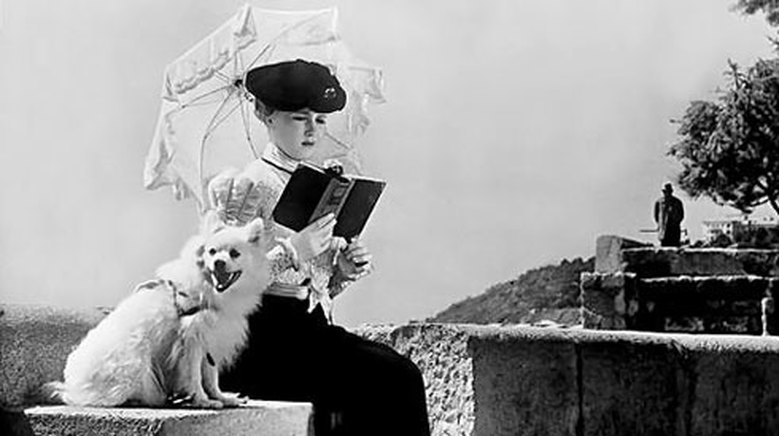
The Lady With The Dog
By Anton Chekhov
IT was said that a new person had appeared on the sea-front: a lady with a little dog. Dmitri Dmitritch Gurov, who had by then been a fortnight at Yalta, and so was fairly at home there, had begun to take an interest in new arrivals. Sitting in Verney's pavilion, he saw, walking on the sea-front, a fair-haired young lady of medium height, wearing a béret; a white Pomeranian dog was running behind her.
And afterwards he met her in the public gardens and in the square several times a day. She was walking alone, always wearing the same béret, and always with the same white dog; no one knew who she was, and every one called her simply "the lady with the dog."
"If she is here alone without a husband or friends, it wouldn't be amiss to make her acquaintance," Gurov reflected.
He was under forty, but he had a daughter already twelve years old, and two sons at school. He had been married young, when he was a student in his second year, and by now his wife seemed half as old again as he. She was a tall, erect woman with dark eyebrows, staid and dignified, and, as she said of herself, intellectual. She read a great deal, used phonetic spelling, called her husband, not Dmitri, but Dimitri, and he secretly considered her unintelligent, narrow, inelegant, was afraid of her, and did not like to be at home. He had begun being unfaithful to her long ago -- had been unfaithful to her often, and, probably on that account, almost always spoke ill of women, and when they were talked about in his presence, used to call them "the lower race."
It seemed to him that he had been so schooled by bitter experience that he might call them what he liked, and yet he could not get on for two days together without "the lower race." In the society of men he was bored and not himself, with them he was cold and uncommunicative; but when he was in the company of women he felt free, and knew what to say to them and how to behave; and he was at ease with them even when he was silent. In his appearance, in his character, in his whole nature, there was something attractive and elusive which allured women and disposed them in his favour; he knew that, and some force seemed to draw him, too, to them.
Experience often repeated, truly bitter experience, had taught him long ago that with decent people, especially Moscow people -- always slow to move and irresolute -- every intimacy, which at first so agreeably diversifies life and appears a light and charming adventure, inevitably grows into a regular problem of extreme intricacy, and in the long run the situation becomes unbearable. But at every fresh meeting with an interesting woman this experience seemed to slip out of his memory, and he was eager for life, and everything seemed simple and amusing.
One evening he was dining in the gardens, and the lady in the béret came up slowly to take the next table. Her expression, her gait, her dress, and the way she did her hair told him that she was a lady, that she was married, that she was in Yalta for the first time and alone, and that she was dull there. . . . The stories told of the immorality in such places as Yalta are to a great extent untrue; he despised them, and knew that such stories were for the most part made up by persons who would themselves have been glad to sin if they had been able; but when the lady sat down at the next table three paces from him, he remembered these tales of easy conquests, of trips to the mountains, and the tempting thought of a swift, fleeting love affair, a romance with an unknown woman, whose name he did not know, suddenly took possession of him.
He beckoned coaxingly to the Pomeranian, and when the dog came up to him he shook his finger at it. The Pomeranian growled: Gurov shook his finger at it again.
The lady looked at him and at once dropped her eyes.
"He doesn't bite," she said, and blushed.
"May I give him a bone?" he asked; and when she nodded he asked courteously, "Have you been long in Yalta?"
"Five days."
"And I have already dragged out a fortnight here."
There was a brief silence.
"Time goes fast, and yet it is so dull here!" she said, not looking at him.
"That's only the fashion to say it is dull here. A provincial will live in Belyov or Zhidra and not be dull, and when he comes here it's 'Oh, the dulness! Oh, the dust!' One would think he came from Grenada."
She laughed. Then both continued eating in silence, like strangers, but after dinner they walked side by side; and there sprang up between them the light jesting conversation of people who are free and satisfied, to whom it does not matter where they go or what they talk about. They walked and talked of the strange light on the sea: the water was of a soft warm lilac hue, and there was a golden streak from the moon upon it. They talked of how sultry it was after a hot day. Gurov told her that he came from Moscow, that he had taken his degree in Arts, but had a post in a bank; that he had trained as an opera-singer, but had given it up, that he owned two houses in Moscow. . . . And from her he learnt that she had grown up in Petersburg, but had lived in S---- since her marriage two years before, that she was staying another month in Yalta, and that her husband, who needed a holiday too, might perhaps come and fetch her. She was not sure whether her husband had a post in a Crown Department or under the Provincial Council -- and was amused by her own ignorance. And Gurov learnt, too, that she was called Anna Sergeyevna.
Afterwards he thought about her in his room at the hotel -- thought she would certainly meet him next day; it would be sure to happen. As he got into bed he thought how lately she had been a girl at school, doing lessons like his own daughter; he recalled the diffidence, the angularity, that was still manifest in her laugh and her manner of talking with a stranger. This must have been the first time in her life she had been alone in surroundings in which she was followed, looked at, and spoken to merely from a secret motive which she could hardly fail to guess. He recalled her slender, delicate neck, her lovely grey eyes.
"There's something pathetic about her, anyway," he thought, and fell asleep.
II
A week had passed since they had made acquaintance. It was a holiday. It was sultry indoors, while in the street the wind whirled the dust round and round, and blew people's hats off. It was a thirsty day, and Gurov often went into the pavilion, and pressed Anna Sergeyevna to have syrup and water or an ice. One did not know what to do with oneself.In the evening when the wind had dropped a little, they went out on the groyne to see the steamer come in. There were a great many people walking about the harbour; they had gathered to welcome some one, bringing bouquets. And two peculiarities of a well-dressed Yalta crowd were very conspicuous: the elderly ladies were dressed like young ones, and there were great numbers of generals.
Owing to the roughness of the sea, the steamer arrived late, after the sun had set, and it was a long time turning about before it reached the groyne. Anna Sergeyevna looked through her lorgnette at the steamer and the passengers as though looking for acquaintances, and when she turned to Gurov her eyes were shining. She talked a great deal and asked disconnected questions, forgetting next moment what she had asked; then she dropped her lorgnette in the crush.
The festive crowd began to disperse; it was too dark to see people's faces. The wind had completely dropped, but Gurov and Anna Sergeyevna still stood as though waiting to see some one else come from the steamer. Anna Sergeyevna was silent now, and sniffed the flowers without looking at Gurov.
"The weather is better this evening," he said. "Where shall we go now? Shall we drive somewhere?"
She made no answer.
Then he looked at her intently, and all at once put his arm round her and kissed her on the lips, and breathed in the moisture and the fragrance of the flowers; and he immediately looked round him, anxiously wondering whether any one had seen them.
"Let us go to your hotel," he said softly. And both walked quickly.
The room was close and smelt of the scent she had bought at the Japanese shop. Gurov looked at her and thought: "What different people one meets in the world!" From the past he preserved memories of careless, good-natured women, who loved cheerfully and were grateful to him for the happiness he gave them, however brief it might be; and of women like his wife who loved without any genuine feeling, with superfluous phrases, affectedly, hysterically, with an expression that suggested that it was not love nor passion, but something more significant; and of two or three others, very beautiful, cold women, on whose faces he had caught a glimpse of a rapacious expression -- an obstinate desire to snatch from life more than it could give, and these were capricious, unreflecting, domineering, unintelligent women not in their first youth, and when Gurov grew cold to them their beauty excited his hatred, and the lace on their linen seemed to him like scales.
But in this case there was still the diffidence, the angularity of inexperienced youth, an awkward feeling; and there was a sense of consternation as though some one had suddenly knocked at the door. The attitude of Anna Sergeyevna -- "the lady with the dog" -- to what had happened was somehow peculiar, very grave, as though it were her fall -- so it seemed, and it was strange and inappropriate. Her face dropped and faded, and on both sides of it her long hair hung down mournfully; she mused in a dejected attitude like "the woman who was a sinner" in an old-fashioned picture.
"It's wrong," she said. "You will be the first to despise me now."
There was a water-melon on the table. Gurov cut himself a slice and began eating it without haste. There followed at least half an hour of silence.
Anna Sergeyevna was touching; there was about her the purity of a good, simple woman who had seen little of life. The solitary candle burning on the table threw a faint light on her face, yet it was clear that she was very unhappy.
"How could I despise you?" asked Gurov. "You don't know what you are saying."
"God forgive me," she said, and her eyes filled with tears. "It's awful."
"You seem to feel you need to be forgiven."
"Forgiven? No. I am a bad, low woman; I despise myself and don't attempt to justify myself. It's not my husband but myself I have deceived. And not only just now; I have been deceiving myself for a long time. My husband may be a good, honest man, but he is a flunkey! I don't know what he does there, what his work is, but I know he is a flunkey! I was twenty when I was married to him. I have been tormented by curiosity; I wanted something better. 'There must be a different sort of life,' I said to myself. I wanted to live! To live, to live! . . . I was fired by curiosity . . . you don't understand it, but, I swear to God, I could not control myself; something happened to me: I could not be restrained. I told my husband I was ill, and came here. . . . And here I have been walking about as though I were dazed, like a mad creature; . . . and now I have become a vulgar, contemptible woman whom any one may despise."
Gurov felt bored already, listening to her. He was irritated by the naïve tone, by this remorse, so unexpected and inopportune; but for the tears in her eyes, he might have thought she was jesting or playing a part.
"I don't understand," he said softly. "What is it you want?"
She hid her face on his breast and pressed close to him.
"Believe me, believe me, I beseech you . . ." she said. "I love a pure, honest life, and sin is loathsome to me. I don't know what I am doing. Simple people say: 'The Evil One has beguiled me.' And I may say of myself now that the Evil One has beguiled me."
"Hush, hush! . . ." he muttered.
He looked at her fixed, scared eyes, kissed her, talked softly and affectionately, and by degrees she was comforted, and her gaiety returned; they both began laughing.
Afterwards when they went out there was not a soul on the sea-front. The town with its cypresses had quite a deathlike air, but the sea still broke noisily on the shore; a single barge was rocking on the waves, and a lantern was blinking sleepily on it.
They found a cab and drove to Oreanda.
"I found out your surname in the hall just now: it was written on the board -- Von Diderits," said Gurov. "Is your husband a German?"
"No; I believe his grandfather was a German, but he is an Orthodox Russian himself."
At Oreanda they sat on a seat not far from the church, looked down at the sea, and were silent. Yalta was hardly visible through the morning mist; white clouds stood motionless on the mountain-tops. The leaves did not stir on the trees, grasshoppers chirruped, and the monotonous hollow sound of the sea rising up from below, spoke of the peace, of the eternal sleep awaiting us. So it must have sounded when there was no Yalta, no Oreanda here; so it sounds now, and it will sound as indifferently and monotonously when we are all no more. And in this constancy, in this complete indifference to the life and death of each of us, there lies hid, perhaps, a pledge of our eternal salvation, of the unceasing movement of life upon earth, of unceasing progress towards perfection. Sitting beside a young woman who in the dawn seemed so lovely, soothed and spellbound in these magical surroundings -- the sea, mountains, clouds, the open sky -- Gurov thought how in reality everything is beautiful in this world when one reflects: everything except what we think or do ourselves when we forget our human dignity and the higher aims of our existence.
A man walked up to them -- probably a keeper -- looked at them and walked away. And this detail seemed mysterious and beautiful, too. They saw a steamer come from Theodosia, with its lights out in the glow of dawn.
"There is dew on the grass," said Anna Sergeyevna, after a silence.
"Yes. It's time to go home."
They went back to the town.
Then they met every day at twelve o'clock on the sea-front, lunched and dined together, went for walks, admired the sea. She complained that she slept badly, that her heart throbbed violently; asked the same questions, troubled now by jealousy and now by the fear that he did not respect her sufficiently. And often in the square or gardens, when there was no one near them, he suddenly drew her to him and kissed her passionately. Complete idleness, these kisses in broad daylight while he looked round in dread of some one's seeing them, the heat, the smell of the sea, and the continual passing to and fro before him of idle, well-dressed, well-fed people, made a new man of him; he told Anna Sergeyevna how beautiful she was, how fascinating. He was impatiently passionate, he would not move a step away from her, while she was often pensive and continually urged him to confess that he did not respect her, did not love her in the least, and thought of her as nothing but a common woman. Rather late almost every evening they drove somewhere out of town, to Oreanda or to the waterfall; and the expedition was always a success, the scenery invariably impressed them as grand and beautiful.
They were expecting her husband to come, but a letter came from him, saying that there was something wrong with his eyes, and he entreated his wife to come home as quickly as possible. Anna Sergeyevna made haste to go.
"It's a good thing I am going away," she said to Gurov. "It's the finger of destiny!"
She went by coach and he went with her. They were driving the whole day. When she had got into a compartment of the express, and when the second bell had rung, she said:
"Let me look at you once more . . . look at you once again. That's right."
She did not shed tears, but was so sad that she seemed ill, and her face was quivering.
"I shall remember you . . . think of you," she said. "God be with you; be happy. Don't remember evil against me. We are parting forever -- it must be so, for we ought never to have met. Well, God be with you."
The train moved off rapidly, its lights soon vanished from sight, and a minute later there was no sound of it, as though everything had conspired together to end as quickly as possible that sweet delirium, that madness. Left alone on the platform, and gazing into the dark distance, Gurov listened to the chirrup of the grasshoppers and the hum of the telegraph wires, feeling as though he had only just waked up. And he thought, musing, that there had been another episode or adventure in his life, and it, too, was at an end, and nothing was left of it but a memory. . . . He was moved, sad, and conscious of a slight remorse. This young woman whom he would never meet again had not been happy with him; he was genuinely warm and affectionate with her, but yet in his manner, his tone, and his caresses there had been a shade of light irony, the coarse condescension of a happy man who was, besides, almost twice her age. All the time she had called him kind, exceptional, lofty; obviously he had seemed to her different from what he really was, so he had unintentionally deceived her. . . .
Here at the station was already a scent of autumn; it was a cold evening.
"It's time for me to go north," thought Gurov as he left the platform. "High time!"
III
At home in Moscow everything was in its winter routine; the stoves were heated, and in the morning it was still dark when the children were having breakfast and getting ready for school, and the nurse would light the lamp for a short time. The frosts had begun already. When the first snow has fallen, on the first day of sledge-driving it is pleasant to see the white earth, the white roofs, to draw soft, delicious breath, and the season brings back the days of one's youth. The old limes and birches, white with hoar-frost, have a good-natured expression; they are nearer to one's heart than cypresses and palms, and near them one doesn't want to be thinking of the sea and the mountains.Gurov was Moscow born; he arrived in Moscow on a fine frosty day, and when he put on his fur coat and warm gloves, and walked along Petrovka, and when on Saturday evening he heard the ringing of the bells, his recent trip and the places he had seen lost all charm for him. Little by little he became absorbed in Moscow life, greedily read three newspapers a day, and declared he did not read the Moscow papers on principle! He already felt a longing to go to restaurants, clubs, dinner-parties, anniversary celebrations, and he felt flattered at entertaining distinguished lawyers and artists, and at playing cards with a professor at the doctors' club. He could already eat a whole plateful of salt fish and cabbage.
In another month, he fancied, the image of Anna Sergeyevna would be shrouded in a mist in his memory, and only from time to time would visit him in his dreams with a touching smile as others did. But more than a month passed, real winter had come, and everything was still clear in his memory as though he had parted with Anna Sergeyevna only the day before. And his memories glowed more and more vividly. When in the evening stillness he heard from his study the voices of his children, preparing their lessons, or when he listened to a song or the organ at the restaurant, or the storm howled in the chimney, suddenly everything would rise up in his memory: what had happened on the groyne, and the early morning with the mist on the mountains, and the steamer coming from Theodosia, and the kisses. He would pace a long time about his room, remembering it all and smiling; then his memories passed into dreams, and in his fancy the past was mingled with what was to come. Anna Sergeyevna did not visit him in dreams, but followed him about everywhere like a shadow and haunted him. When he shut his eyes he saw her as though she were living before him, and she seemed to him lovelier, younger, tenderer than she was; and he imagined himself finer than he had been in Yalta. In the evenings she peeped out at him from the bookcase, from the fireplace, from the corner -- he heard her breathing, the caressing rustle of her dress. In the street he watched the women, looking for some one like her.
He was tormented by an intense desire to confide his memories to some one. But in his home it was impossible to talk of his love, and he had no one outside; he could not talk to his tenants nor to any one at the bank. And what had he to talk of? Had he been in love, then? Had there been anything beautiful, poetical, or edifying or simply interesting in his relations with Anna Sergeyevna? And there was nothing for him but to talk vaguely of love, of woman, and no one guessed what it meant; only his wife twitched her black eyebrows, and said:
"The part of a lady-killer does not suit you at all, Dimitri."
One evening, coming out of the doctors' club with an official with whom he had been playing cards, he could not resist saying:
"If only you knew what a fascinating woman I made the acquaintance of in Yalta!"
The official got into his sledge and was driving away, but turned suddenly and shouted:
"Dmitri Dmitritch!"
"What?"
"You were right this evening: the sturgeon was a bit too strong!"
These words, so ordinary, for some reason moved Gurov to indignation, and struck him as degrading and unclean. What savage manners, what people! What senseless nights, what uninteresting, uneventful days! The rage for card-playing, the gluttony, the drunkenness, the continual talk always about the same thing. Useless pursuits and conversations always about the same things absorb the better part of one's time, the better part of one's strength, and in the end there is left a life grovelling and curtailed, worthless and trivial, and there is no escaping or getting away from it -- just as though one were in a madhouse or a prison.
Gurov did not sleep all night, and was filled with indignation. And he had a headache all next day. And the next night he slept badly; he sat up in bed, thinking, or paced up and down his room. He was sick of his children, sick of the bank; he had no desire to go anywhere or to talk of anything.
In the holidays in December he prepared for a journey, and told his wife he was going to Petersburg to do something in the interests of a young friend -- and he set off for S----. What for? He did not very well know himself. He wanted to see Anna Sergeyevna and to talk with her -- to arrange a meeting, if possible.
He reached S---- in the morning, and took the best room at the hotel, in which the floor was covered with grey army cloth, and on the table was an inkstand, grey with dust and adorned with a figure on horseback, with its hat in its hand and its head broken off. The hotel porter gave him the necessary information; Von Diderits lived in a house of his own in Old Gontcharny Street -- it was not far from the hotel: he was rich and lived in good style, and had his own horses; every one in the town knew him. The porter pronounced the name "Dridirits."
Gurov went without haste to Old Gontcharny Street and found the house. Just opposite the house stretched a long grey fence adorned with nails.
"One would run away from a fence like that," thought Gurov, looking from the fence to the windows of the house and back again.
He considered: to-day was a holiday, and the husband would probably be at home. And in any case it would be tactless to go into the house and upset her. If he were to send her a note it might fall into her husband's hands, and then it might ruin everything. The best thing was to trust to chance. And he kept walking up and down the street by the fence, waiting for the chance. He saw a beggar go in at the gate and dogs fly at him; then an hour later he heard a piano, and the sounds were faint and indistinct. Probably it was Anna Sergeyevna playing. The front door suddenly opened, and an old woman came out, followed by the familiar white Pomeranian. Gurov was on the point of calling to the dog, but his heart began beating violently, and in his excitement he could not remember the dog's name.
He walked up and down, and loathed the grey fence more and more, and by now he thought irritably that Anna Sergeyevna had forgotten him, and was perhaps already amusing herself with some one else, and that that was very natural in a young woman who had nothing to look at from morning till night but that confounded fence. He went back to his hotel room and sat for a long while on the sofa, not knowing what to do, then he had dinner and a long nap.
"How stupid and worrying it is!" he thought when he woke and looked at the dark windows: it was already evening. "Here I've had a good sleep for some reason. What shall I do in the night?"
He sat on the bed, which was covered by a cheap grey blanket, such as one sees in hospitals, and he taunted himself in his vexation:
"So much for the lady with the dog . . . so much for the adventure. . . . You're in a nice fix. . . ."
That morning at the station a poster in large letters had caught his eye. "The Geisha" was to be performed for the first time. He thought of this and went to the theatre.
"It's quite possible she may go to the first performance," he thought.
The theatre was full. As in all provincial theatres, there was a fog above the chandelier, the gallery was noisy and restless; in the front row the local dandies were standing up before the beginning of the performance, with their hands behind them; in the Governor's box the Governor's daughter, wearing a boa, was sitting in the front seat, while the Governor himself lurked modestly behind the curtain with only his hands visible; the orchestra was a long time tuning up; the stage curtain swayed. All the time the audience were coming in and taking their seats Gurov looked at them eagerly.
Anna Sergeyevna, too, came in. She sat down in the third row, and when Gurov looked at her his heart contracted, and he understood clearly that for him there was in the whole world no creature so near, so precious, and so important to him; she, this little woman, in no way remarkable, lost in a provincial crowd, with a vulgar lorgnette in her hand, filled his whole life now, was his sorrow and his joy, the one happiness that he now desired for himself, and to the sounds of the inferior orchestra, of the wretched provincial violins, he thought how lovely she was. He thought and dreamed.
A young man with small side-whiskers, tall and stooping, came in with Anna Sergeyevna and sat down beside her; he bent his head at every step and seemed to be continually bowing. Most likely this was the husband whom at Yalta, in a rush of bitter feeling, she had called a flunkey. And there really was in his long figure, his side-whiskers, and the small bald patch on his head, something of the flunkey's obsequiousness; his smile was sugary, and in his buttonhole there was some badge of distinction like the number on a waiter.
During the first interval the husband went away to smoke; she remained alone in her stall. Gurov, who was sitting in the stalls, too, went up to her and said in a trembling voice, with a forced smile:
"Good-evening."
She glanced at him and turned pale, then glanced again with horror, unable to believe her eyes, and tightly gripped the fan and the lorgnette in her hands, evidently struggling with herself not to faint. Both were silent. She was sitting, he was standing, frightened by her confusion and not venturing to sit down beside her. The violins and the flute began tuning up. He felt suddenly frightened; it seemed as though all the people in the boxes were looking at them. She got up and went quickly to the door; he followed her, and both walked senselessly along passages, and up and down stairs, and figures in legal, scholastic, and civil service uniforms, all wearing badges, flitted before their eyes. They caught glimpses of ladies, of fur coats hanging on pegs; the draughts blew on them, bringing a smell of stale tobacco. And Gurov, whose heart was beating violently, thought:
"Oh, heavens! Why are these people here and this orchestra! . . ."
And at that instant he recalled how when he had seen Anna Sergeyevna off at the station he had thought that everything was over and they would never meet again. But how far they were still from the end!
On the narrow, gloomy staircase over which was written "To the Amphitheatre," she stopped.
"How you have frightened me!" she said, breathing hard, still pale and overwhelmed. "Oh, how you have frightened me! I am half dead. Why have you come? Why?"
"But do understand, Anna, do understand . . ." he said hastily in a low voice. "I entreat you to understand. . . ."
She looked at him with dread, with entreaty, with love; she looked at him intently, to keep his features more distinctly in her memory.
"I am so unhappy," she went on, not heeding him. "I have thought of nothing but you all the time; I live only in the thought of you. And I wanted to forget, to forget you; but why, oh, why, have you come?"
On the landing above them two schoolboys were smoking and looking down, but that was nothing to Gurov; he drew Anna Sergeyevna to him, and began kissing her face, her cheeks, and her hands.
"What are you doing, what are you doing!" she cried in horror, pushing him away. "We are mad. Go away to-day; go away at once. . . . I beseech you by all that is sacred, I implore you. . . . There are people coming this way!"
Some one was coming up the stairs.
"You must go away," Anna Sergeyevna went on in a whisper. "Do you hear, Dmitri Dmitritch? I will come and see you in Moscow. I have never been happy; I am miserable now, and I never, never shall be happy, never! Don't make me suffer still more! I swear I'll come to Moscow. But now let us part. My precious, good, dear one, we must part!"
She pressed his hand and began rapidly going downstairs, looking round at him, and from her eyes he could see that she really was unhappy. Gurov stood for a little while, listened, then, when all sound had died away, he found his coat and left the theatre.
IV
And Anna Sergeyevna began coming to see him in Moscow. Once in two or three months she left S----, telling her husband that she was going to consult a doctor about an internal complaint -- and her husband believed her, and did not believe her. In Moscow she stayed at the Slaviansky Bazaar hotel, and at once sent a man in a red cap to Gurov. Gurov went to see her, and no one in Moscow knew of it.Once he was going to see her in this way on a winter morning (the messenger had come the evening before when he was out). With him walked his daughter, whom he wanted to take to school: it was on the way. Snow was falling in big wet flakes.
"It's three degrees above freezing-point, and yet it is snowing," said Gurov to his daughter. "The thaw is only on the surface of the earth; there is quite a different temperature at a greater height in the atmosphere."
"And why are there no thunderstorms in the winter, father?"
He explained that, too. He talked, thinking all the while that he was going to see her, and no living soul knew of it, and probably never would know. He had two lives: one, open, seen and known by all who cared to know, full of relative truth and of relative falsehood, exactly like the lives of his friends and acquaintances; and another life running its course in secret. And through some strange, perhaps accidental, conjunction of circumstances, everything that was essential, of interest and of value to him, everything in which he was sincere and did not deceive himself, everything that made the kernel of his life, was hidden from other people; and all that was false in him, the sheath in which he hid himself to conceal the truth -- such, for instance, as his work in the bank, his discussions at the club, his "lower race," his presence with his wife at anniversary festivities -- all that was open. And he judged of others by himself, not believing in what he saw, and always believing that every man had his real, most interesting life under the cover of secrecy and under the cover of night. All personal life rested on secrecy, and possibly it was partly on that account that civilised man was so nervously anxious that personal privacy should be respected.
After leaving his daughter at school, Gurov went on to the Slaviansky Bazaar. He took off his fur coat below, went upstairs, and softly knocked at the door. Anna Sergeyevna, wearing his favourite grey dress, exhausted by the journey and the suspense, had been expecting him since the evening before. She was pale; she looked at him, and did not smile, and he had hardly come in when she fell on his breast. Their kiss was slow and prolonged, as though they had not met for two years.
"Well, how are you getting on there?" he asked. "What news?"
"Wait; I'll tell you directly. . . . I can't talk."
She could not speak; she was crying. She turned away from him, and pressed her handkerchief to her eyes.
"Let her have her cry out. I'll sit down and wait," he thought, and he sat down in an arm-chair.
Then he rang and asked for tea to be brought him, and while he drank his tea she remained standing at the window with her back to him. She was crying from emotion, from the miserable consciousness that their life was so hard for them; they could only meet in secret, hiding themselves from people, like thieves! Was not their life shattered?
"Come, do stop!" he said.
It was evident to him that this love of theirs would not soon be over, that he could not see the end of it. Anna Sergeyevna grew more and more attached to him. She adored him, and it was unthinkable to say to her that it was bound to have an end some day; besides, she would not have believed it!
He went up to her and took her by the shoulders to say something affectionate and cheering, and at that moment he saw himself in the looking-glass.
His hair was already beginning to turn grey. And it seemed strange to him that he had grown so much older, so much plainer during the last few years. The shoulders on which his hands rested were warm and quivering. He felt compassion for this life, still so warm and lovely, but probably already not far from beginning to fade and wither like his own. Why did she love him so much? He always seemed to women different from what he was, and they loved in him not himself, but the man created by their imagination, whom they had been eagerly seeking all their lives; and afterwards, when they noticed their mistake, they loved him all the same. And not one of them had been happy with him. Time passed, he had made their acquaintance, got on with them, parted, but he had never once loved; it was anything you like, but not love.
And only now when his head was grey he had fallen properly, really in love -- for the first time in his life.
Anna Sergeyevna and he loved each other like people very close and akin, like husband and wife, like tender friends; it seemed to them that fate itself had meant them for one another, and they could not understand why he had a wife and she a husband; and it was as though they were a pair of birds of passage, caught and forced to live in different cages. They forgave each other for what they were ashamed of in their past, they forgave everything in the present, and felt that this love of theirs had changed them both.
In moments of depression in the past he had comforted himself with any arguments that came into his mind, but now he no longer cared for arguments; he felt profound compassion, he wanted to be sincere and tender. . . .
"Don't cry, my darling," he said. "You've had your cry; that's enough. . . . Let us talk now, let us think of some plan."
Then they spent a long while taking counsel together, talked of how to avoid the necessity for secrecy, for deception, for living in different towns and not seeing each other for long at a time. How could they be free from this intolerable bondage?
"How? How?" he asked, clutching his head. "How?"
And it seemed as though in a little while the solution would be found, and then a new and splendid life would begin; and it was clear to both of them that they had still a long, long road before them, and that the most complicated and difficult part of it was only just beginning.
Wednesday, 6 February 2013
Unit 1: Realism and Chekhov
The above is the example of the Prezi format I would like you to do as part of your group work. Basically, I simply want you guys to spend some time digging into the authors and their movements in order to share with the class. You may wish to consider historical and biographical elements as they relate to the stories and wider movement associated. Why do writers write what they write in the way they write it? That's the basic question you will address through the Prezi. I will update a schedule and groups ASAP to give you plenty of time.
Course Outline and Schedule
|
|||||||||||||||||||
|
|||||||||||||||||||
|
|||||||||||||||||||
|
|||||||||||||||||||
|
|||||||||||||||||||
|
|||||||||||||||||||
|
|||||||||||||||||||
|
|||||||||||||||||||
| |||||||||||||||||||
Subscribe to:
Posts (Atom)